
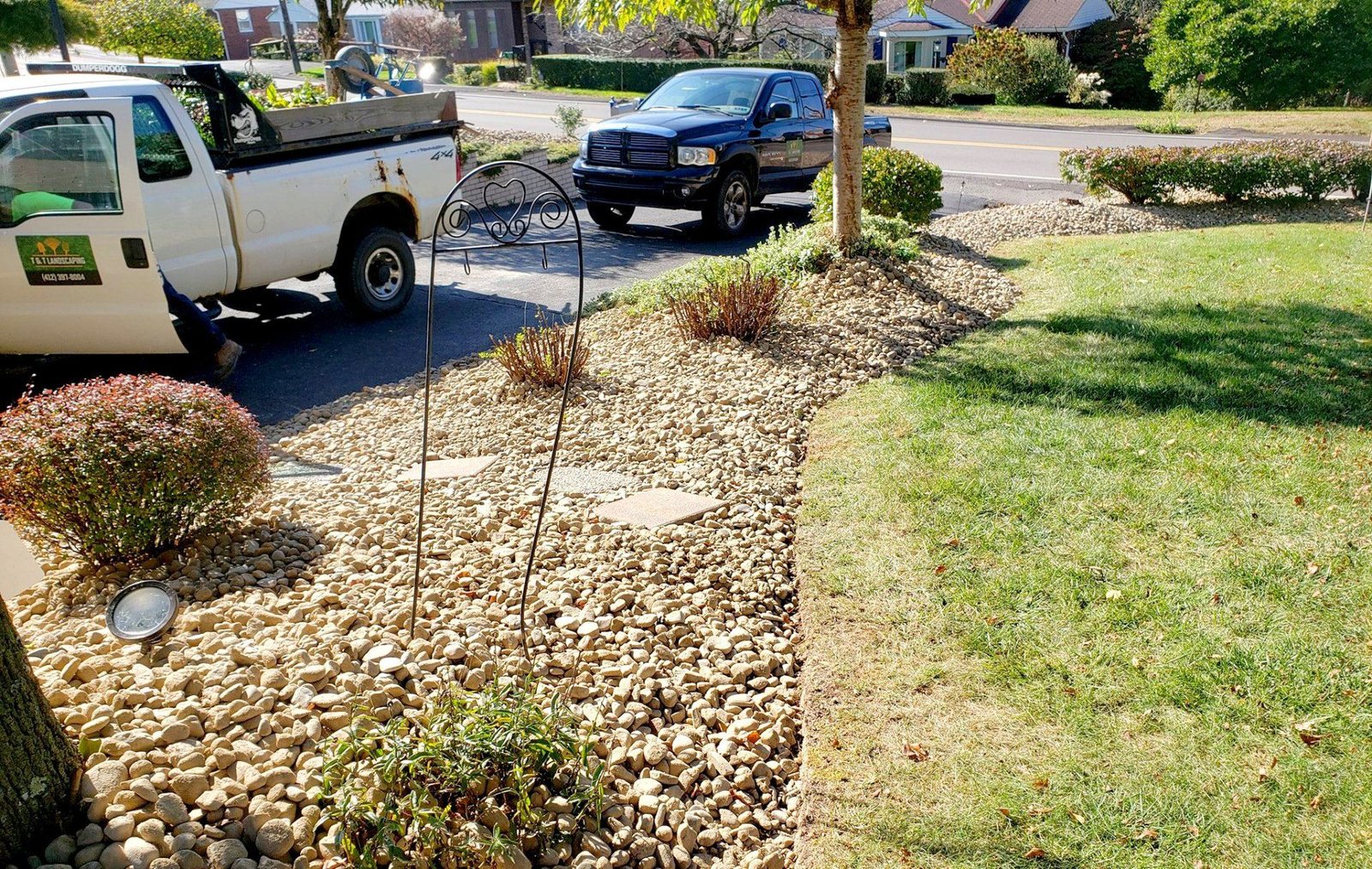
Why Good Landscaping Changes Everything
You can pave a beautiful patio, build a solid retaining wall, pour a perfect driveway — and the property will still feel incomplete if the plants around it don’t tie it all together. Landscaping is what turns a house into a home and a yard into a place people actually want to spend time in. It’s the shade tree that makes a patio usable in July, the foundation planting that keeps a house from looking like it’s sitting on bare dirt, the flowering border that makes someone slow down as they drive past your place.
Around Coraopolis and Moon Township, every yard has its own personality — clay soil on a hillside, a shady lot under mature oaks, a flat corner property that bakes in full sun. There’s no one-size-fits-all planting plan that works for every property in the 15108 area. That’s why landscape design matters. A plan that accounts for your soil, your light, your terrain, and the amount of maintenance you actually want to do is the difference between a yard that thrives and one that’s always struggling.
T&T Landscaping Inc. handles the full scope of residential landscaping across the greater Pittsburgh metro — from the first conversation about what you’re hoping for, through plant selection and design, installation, and the ongoing care that keeps everything looking sharp season after season.
What makes a good landscape design?
A good landscape design starts with the property, not a catalog. Before a single plant goes in the ground, we walk the yard and look at the things that matter: Where does water go when it rains? Which areas get full sun and which sit in shade most of the day? How does the soil drain — or does it just hold water? What’s already growing that’s worth keeping?
From there, a design takes shape around three priorities. First, function — the plantings should solve problems. Foundation shrubs manage moisture and temperature around your home. Shade trees cool the spaces where people sit. Ground cover stabilizes a slope that’s hard to mow. Second, proportion — plants grow, and a design that looks right at installation should still look right in five years when those three-foot boxwoods are five feet tall. Third, visual interest across all four seasons — not just a spring show that goes dormant by August.
In western PA, that third point is especially important. We get real winters. A landscape plan that only considers spring and summer leaves you looking at bare sticks from November through March. Evergreen structure, winter bark color, ornamental grasses that hold their shape through snow — these are the details that separate a thought-through design from a trip to the garden center.
What We Plant and Where
Foundation plantings
Foundation planting is the landscaping immediately around the base of your house — the shrubs, ground cover, and small trees that frame your front entry, line your walkway, and soften the transition from building to yard. It’s often the first landscaping a homeowner invests in, and it has the single biggest impact on curb appeal.
A strong foundation planting in western PA typically includes a mix of evergreen and deciduous shrubs for year-round presence. Boxwood, holly, and yew give structure through winter. Hydrangeas, azaleas, and viburnum add seasonal flowers and color. Low perennials or ground cover fill the front edge. The goal is layers — taller plants against the house, medium in the middle, low in front — that draw the eye toward the entry without blocking windows or crowding walkways.
Most foundation plantings we install in Coraopolis and Moon Township run between $1,500 and $4,000 depending on the size of the house frontage and the plant sizes selected. That includes removal of any old overgrown plantings, soil amendment, installation, and mulch.
What are the best plants for the Pittsburgh area?
The Pittsburgh metro sits in USDA hardiness zone 6a, which means winter lows between -10°F and -5°F. That’s cold enough to rule out many plants that work in the mid-Atlantic or the Southeast, but warm enough for a broad range of hardy shrubs, perennials, and trees. The real challenge here isn’t just cold — it’s the freeze-thaw cycling, the heavy clay soil, and the mix of sun and shade that changes dramatically from one side of a lot to the other.
Plants that perform well in western PA:
- Evergreen shrubs: Boxwood (Buxus), inkberry holly, arborvitae, juniper, yew (Taxus). These provide year-round structure and screening.
- Deciduous shrubs: Hydrangea (panicle and smooth types handle zone 6a best), viburnum, ninebark, spirea, red twig dogwood, forsythia. Seasonal color and texture.
- Perennials: Black-eyed Susan (Rudbeckia), coneflower (Echinacea), hosta, daylily, catmint, salvia, sedum. Low-maintenance and reliable bloomers.
- Ornamental grasses: Karl Foerster feather reed grass, switchgrass, maiden grass. Movement, height, and winter interest.
- Native plants: Serviceberry, eastern redbud, Virginia sweetspire, Joe-Pye weed, blue flag iris. Pollinator-friendly and adapted to local soil conditions.
- Shade plants: Astilbe, fern, bleeding heart, brunnera, heuchera. Essential for the many shaded lots under Pittsburgh’s mature tree canopy.
T&T Landscaping selects plants that are proven performers in the 15108 area — not whatever’s on sale at a big box store. Every plant we install is chosen for its specific spot: the right plant for the right light, soil, and exposure.
When should you plant in western PA?
Timing matters more than most people realize. Plant too early and a late frost kills new growth. Plant too late and roots don’t have time to establish before winter.
Best planting windows for the Pittsburgh area:
- Spring: Late April through May, once the soil has thawed and nighttime temperatures stay above freezing consistently. This is the ideal window for perennials and annuals.
- Fall: September through mid-October. The soil is still warm enough for root growth, but the cooler air reduces transplant stress. This is actually the best time to plant most shrubs and trees — they spend all winter establishing roots and hit the ground running in spring.
- Avoid: Late June through August for major planting projects. Heat stress makes establishment harder, and you’ll be irrigating constantly to keep new plants alive.
Front Yard Landscaping and Curb Appeal
How do you improve curb appeal with landscaping?
Front yard landscaping is where most homeowners see the biggest return on their investment — both in daily satisfaction and in property value. A well-landscaped front yard doesn’t just look better; it signals to anyone driving by that this house is cared for.
The biggest curb appeal upgrades we do in Coraopolis and Moon Township:
- Ripping out overgrown foundations. If the bushes planted 30 years ago have swallowed the front windows, they’re hurting more than helping. We remove the old growth, amend the soil, and install properly sized plants that complement the house instead of hiding it.
- Adding a walkway border. Plantings along a front walkway — even a simple row of boxwood or low perennials — frame the approach to your door and make the entry feel intentional.
- Ornamental trees. A single well-placed ornamental tree — a Japanese maple, a redbud, a magnolia — can transform a flat front yard. It adds vertical interest, shade, and seasonal color that no amount of shrubs alone can match.
- Lighting. Landscape lighting along walkways and up-lighting on trees or the house facade extends curb appeal into the evening hours. It’s a detail most neighbors don’t have, and it shows.
Backyard Landscaping
What can you do with a backyard that’s mostly just grass?
Backyard landscaping is where function matters most. The front yard is about presentation. The backyard is about living — and the best backyard landscapes create distinct zones for different uses.
A gathering space near the house — a paver patio or a simple stone terrace — anchored by planting beds that provide screening from neighbors. A play area for kids or grandkids, bordered by low maintenance ground cover instead of mulch. A garden corner with raised beds. A fire pit area set into a far corner with ornamental grasses creating a windbreak and a sense of enclosure.
The yards around Coraopolis and Moon Township tend to have sloped sections, shade pockets under mature trees, and clay soil that holds water in low spots. A good backyard landscape plan works with those conditions instead of fighting them. That might mean a retaining wall to terrace a slope into usable levels, drainage to redirect water away from the patio, and shade-tolerant plantings under the big oaks instead of fighting to grow sun-loving plants where they’ll never thrive.
Landscape Renovation vs. Starting From Scratch
Should you renovate your existing landscaping or start over?
This is a question we hear all the time. The answer depends on what’s already there and how much of it is still working.
If the bones are good — mature trees worth keeping, a layout that makes sense, healthy plants that just need pruning and cleanup — a landscape renovation is the smarter move. We keep what’s working, remove what isn’t, fill in gaps with new plantings, refresh the mulch, and bring the whole thing back to life. A renovation costs less than a full redesign and preserves the maturity that makes a landscape feel established.
If the existing landscape is overgrown to the point where the plants are damaging the house, the bed layout doesn’t make sense for how you use the property, or the plant selection was wrong for the site conditions from the start (sun plants in shade, acid-loving plants in alkaline soil), starting over with a clean design is the better investment. You’re not throwing money at something that was never going to work.
T&T Landscaping evaluates both options honestly. If a renovation will get you what you want, we’ll say so. If the existing landscape is a lost cause and fresh design is the right call, we’ll tell you that too.
Shrub Trimming and Tree Pruning
How often should shrubs and trees be pruned?
Shrub trimming and tree pruning are ongoing maintenance tasks that keep a landscape looking intentional rather than overgrown. The schedule depends on the plant:
- Deciduous shrubs: Prune annually, typically in late winter or early spring before new growth starts. This encourages strong new growth and keeps the plant in proportion.
- Spring-flowering shrubs (azalea, lilac, forsythia): Prune right after they finish blooming. If you prune these in late winter, you’ll cut off the buds that would have flowered.
- Evergreen hedges (boxwood, holly, arborvitae): Trim once or twice per year — late spring after the first flush of growth, and optionally again in late summer. Avoid trimming after September so new growth has time to harden off before frost.
- Ornamental trees: Prune every 2 to 3 years to maintain shape, remove crossing branches, and clear dead wood. Major pruning is best done in winter when the tree is dormant and you can see the branching structure clearly.
T&T Landscaping offers scheduled pruning as part of ongoing maintenance plans, so your landscape stays in shape year-round without you having to think about it.
Landscaping in Coraopolis, Moon Township, and the 15108 Area
Every property in this area has its own set of conditions. The lots closer to the Ohio River tend to have more slope and heavier clay. Properties up in Moon Township often have more sun exposure but still deal with the same clay drainage issues. Older neighborhoods in Coraopolis have mature tree canopies that create deep shade challenges. Newer developments sometimes have builder-grade landscaping — a few token shrubs and grass seed — that’s ready for a real upgrade within a few years of moving in.
We’ve been working in this area long enough to know what grows well on these specific properties, what to avoid, and where the typical problem spots are. If you’re thinking about landscaping — whether it’s refreshing the front of the house, redesigning the backyard, or just getting the shrubs under control — give us a call. We’ll walk the property with you, talk through what you’re hoping for, and give you an honest estimate.
Call or text (412) 397-8004 or fill out an estimate request. Free estimates, no pressure, no generic sales pitch — just a plan that fits your property and your budget.