
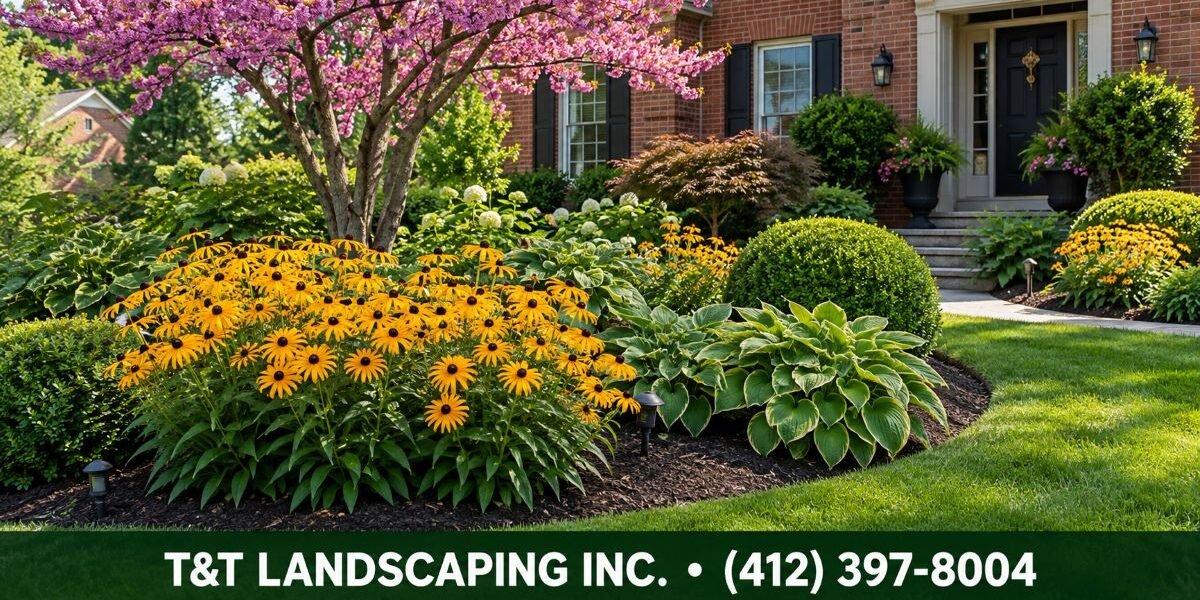
Gardening in Zone 6a — What You’re Working With
Western Pennsylvania sits in USDA Hardiness Zone 6a, which means average minimum winter temperatures drop to somewhere between -10°F and -5°F. That number matters because it determines which plants survive the winter and come back the following spring. A plant rated Zone 5 will handle Pittsburgh just fine. A plant rated Zone 7 probably won’t make it past February.
But cold hardiness is only half the story around here. The soil in Coraopolis, Moon Township, and most of the Pittsburgh metro is heavy clay — dense, slow to drain, and prone to compaction. In spring it stays cold and wet longer than sandy or loamy soils, which delays planting. In summer it bakes hard. Plants that need loose, well-drained soil struggle in Pittsburgh clay unless you amend the planting bed with compost and organic matter.
Then there’s the light situation. The hills, mature trees, and north-facing slopes that define western PA neighborhoods create a wide range of sun exposure, sometimes within the same yard. A south-facing front bed might get full sun all day. The backyard behind the house might sit in shade from noon on. Choosing plants that match your actual light conditions — not the light you wish you had — makes the difference between a garden that thrives and one that limps along.
T&T Landscaping handles landscape design and planting across the 15108 area. We work with every one of these conditions on a daily basis. The plants in this guide are the ones we recommend most often — because they work.
Table of Contents
Best Shrubs for Pittsburgh
What shrubs grow best in the Pittsburgh area?
Shrubs form the backbone of any residential landscape. They provide year-round structure, privacy screening, foundation planting, and a framework for seasonal color. In western PA, the best shrubs are ones that tolerate clay soil, handle cold winters, and don’t require constant attention to look good.
Boxwood (Buxus) — The classic evergreen hedge and foundation shrub. Boxwood keeps its foliage year-round, takes shearing well, and grows in sun or partial shade. For Pittsburgh, go with cold-hardy cultivars like ‘Green Velvet’ or ‘Winter Gem’ rather than English boxwood, which can suffer winter burn. Boxwood grows slowly, which means less maintenance trimming and a tidy appearance without constant pruning.
Hydrangea — A favorite for Pittsburgh gardens, but variety selection matters. Panicle hydrangeas (Limelight, Quick Fire, Bobo) are the safest bet because they bloom on new wood — meaning even if a late frost kills the old growth, they still flower that year. Smooth hydrangeas (Annabelle, Incrediball) are also reliable. Avoid classic mophead hydrangeas unless you have a protected spot — their old-wood blooms are vulnerable to Pittsburgh’s unpredictable spring freezes.
Viburnum — An underused shrub that deserves more attention. Viburnums range from compact 3-foot mounds to large 12-foot screening plants. Many bloom in spring with white flower clusters, produce berries that attract birds in fall, and display red or burgundy fall foliage. Arrowwood viburnum (V. dentatum) is native to Pennsylvania and handles clay soil without complaint.
Holly (Ilex) — Winterberry holly (Ilex verticillata) is a native deciduous holly that drops its leaves in fall and covers its bare stems with brilliant red berries through winter — stunning against snow. For evergreen screening, Inkberry holly (Ilex glabra) handles wet clay soil better than most evergreens and grows 6 to 8 feet tall. Both are excellent choices for the Pittsburgh area.
Spirea — For affordable, low-maintenance color, spirea is hard to beat. Varieties like ‘Goldflame’ and ‘Little Princess’ bloom in summer, grow quickly, tolerate clay, and require little beyond an annual spring pruning. They’re especially useful for mass planting along foundations and borders.
Best Perennials for Western PA
Which perennials come back reliably in zone 6a?
Perennials die back to the ground in winter and return each spring — but only if they’re tough enough for your zone and soil. These are the perennials we see performing year after year in Pittsburgh-area gardens.
Coneflower (Echinacea purpurea) — Native, deer-resistant, drought-tolerant once established, and a magnet for pollinators. Classic purple coneflower is the most reliable, though hybrid cultivars in orange, yellow, and red add variety. Coneflowers bloom from midsummer through early fall and look good even in the dead flower stage, providing seed for goldfinches through winter.
Black-eyed Susan (Rudbeckia) — Another native workhorse. Bright yellow-gold flowers bloom from July through September, lighting up any sunny border. They self-seed gently — enough to fill gaps in the bed without becoming invasive. ‘Goldsturm’ is the most popular cultivar for a reason: compact habit, heavy bloom, and bulletproof reliability.
Hosta — The go-to shade perennial for western PA. Hostas thrive in the partial-to-full shade that covers most Pittsburgh backyards. They come in hundreds of varieties — from 4-inch miniatures to 4-foot monsters — with leaf colors ranging from blue-green to gold to variegated white. Slugs are the main enemy. Thick-leaved varieties like ‘Sum and Substance’ and ‘Halcyon’ resist slug damage better than thin-leaved types.
Daylily (Hemerocallis) — Virtually indestructible. Daylilies tolerate drought, clay, poor soil, and partial shade. They bloom in a huge range of colors from late spring through summer depending on the variety. ‘Stella de Oro’ is the classic rebloomer — compact, gold-flowered, and blooming all summer. For something showier, ‘Happy Returns’ (lemon yellow) and ‘Pardon Me’ (deep red) perform well in Zone 6a.
Catmint (Nepeta) — A low-maintenance, deer-resistant perennial that blooms in waves of lavender-blue from late spring through fall. ‘Walker’s Low’ is the standard — it grows about 2 feet tall, needs no staking, tolerates heat and drought, and pollinators love it. Shear it back by half after the first flush of flowers and it rebounds with a second bloom.
Sedum (Stonecrop) — Perfect for hot, dry spots where other perennials struggle. Tall varieties like ‘Autumn Joy’ produce pink flower heads in late summer that age to copper and provide winter structure. Creeping varieties work as ground cover along walkways and retaining wall edges. Sedums are about as low-maintenance as a perennial gets.
Native Plants for Western Pennsylvania
Why should I plant native species?
Native plants evolved alongside the insects, birds, and soil organisms of this region. They support local pollinators, require less water and fertilizer once established, and handle local climate extremes better than imports from other continents. For homeowners, that translates to lower maintenance and a landscape that looks like it belongs here — because it does.
Serviceberry (Amelanchier) — A small native tree or large shrub that earns its keep in every season. White flowers in early spring, edible berries in June, brilliant orange-red fall color, and attractive bark in winter. Grows 15 to 25 feet tall depending on the species. Excellent as a specimen tree in a foundation planting or along a property edge.
Flowering Dogwood (Cornus florida) — Pennsylvania’s most beloved ornamental tree. White or pink bracts in spring, red berries in fall, and layered branching that looks elegant even in winter. Dogwoods prefer partial shade with some protection from afternoon sun — the edge of a woodland or the east side of a house is ideal. They don’t love heavy clay, so amend the planting hole with compost.
Native Ferns — For deep shade under mature trees where little else grows, native ferns fill the gap beautifully. Christmas fern stays evergreen through winter. Ostrich fern produces tall, arching fronds. Maidenhair fern adds delicate texture. All prefer moist, shaded conditions — exactly what many Pittsburgh backyards provide.
Switchgrass (Panicum virgatum) — A native ornamental grass that provides movement, texture, and fall color. Grows 3 to 5 feet tall, tolerates drought and clay, and provides winter interest with its upright seed heads. ‘Shenandoah’ turns burgundy in fall. ‘Northwind’ stays columnar and blue-green. Both are deer-resistant and virtually maintenance-free.
Spicebush (Lindera benzoin) — An underappreciated native shrub. Yellow spring flowers appear before the leaves, aromatic foliage provides summer interest, and female plants produce red berries in fall that attract songbirds. Spicebush is the host plant for the spicebush swallowtail butterfly. It grows well in shade and handles wet soil — ideal for the low, damp spots in many western PA yards.
Best Shade Plants for Western PA
What grows well in shady Pittsburgh yards?
Shade is the default condition for many Pittsburgh backyards. Between the mature oak and maple canopy, the hills that block afternoon sun, and the shadows cast by houses built close together, full sun is the exception in many neighborhoods. These plants thrive in those conditions.
Beyond the hostas and ferns already mentioned: Astilbe produces feathery flower plumes in pink, red, white, and purple from June through August and prefers the moist, shaded conditions common in western PA. Heuchera (Coral Bells) offers dramatic foliage in colors from deep purple to lime green to silver — grown for its leaves rather than its flowers, it adds year-round color to shade gardens. Hellebore (Lenten Rose) blooms in late February through March when nothing else is flowering — cup-shaped flowers in white, pink, purple, and green push through the last of the snow. Deer and rabbits leave them alone.
Brunnera (Siberian Bugloss) — Heart-shaped silver-frosted leaves with tiny blue forget-me-not flowers in spring. ‘Jack Frost’ is the signature variety. It lights up dark shade gardens and handles the clay-heavy, moisture-retentive soil in Pittsburgh without issue. Slugs occasionally bother it, but far less than hostas.
Evergreen Options for Year-Round Interest
How do I keep my landscape looking good in winter?
Pittsburgh winters are long. From November through March, a yard with only deciduous plants looks bare. Strategic evergreen placement gives your landscape year-round structure.
Arborvitae (Thuja) — The most common screening evergreen in the Pittsburgh area. ‘Green Giant’ grows fast (3+ feet per year) and reaches 40 to 60 feet — great for privacy along property lines. ‘Emerald Green’ stays narrow and columnar at 12 to 15 feet — better for tight spaces. Both handle clay soil and full sun. Deer browse arborvitae heavily in some neighborhoods, though — if deer pressure is high, consider Inkberry holly instead.
Japanese Yew (Taxus) — A shade-tolerant evergreen shrub that handles pruning, clay soil, and cold winters. Yews work as foundation plantings, hedges, and specimen shrubs. They’re one of the few evergreens that thrive in shade. ‘Densiformis’ spreads wide; ‘Hicksii’ grows upright. Both are reliable in Zone 6a.
Blue Spruce, White Pine, Eastern Hemlock — For larger properties, native conifers provide wind screening, privacy, and wildlife habitat. Eastern hemlock is especially valuable for shaded sites. Blue spruce handles heavy clay better than most conifers. White pine grows fast but needs room — it can reach 80 feet.
Planting Tips for Pittsburgh-Area Gardens
When should I plant in the Pittsburgh area?
There are two ideal planting windows in western PA:
- Spring: mid-April through early June. Wait until the soil has thawed and dried out enough that it doesn’t clump in your fist. Planting too early in cold, wet clay stunts root growth. Most nurseries have their best selection in late April and May.
- Fall: mid-September through mid-October. The soil is still warm enough for root growth even as air temperatures cool. Fall rain handles much of the watering for you. Plants establish roots through fall and winter, then take off in spring with a head start.
Avoid planting in July and August unless you can commit to regular watering. The heat stress on new plants combined with Pittsburgh’s clay soil — which bakes hard in summer — makes midsummer planting risky.
How should I deal with Pittsburgh clay soil?
Amend individual planting holes by mixing the existing clay with compost at roughly a 50/50 ratio. Don’t create a perfect pocket of amended soil that’s dramatically different from the surrounding ground — that creates a “bathtub effect” where water collects in the amended area and drowns the roots. Blend the amended soil gradually into the native clay around the edges.
For entire beds, work 3 to 4 inches of compost into the top 8 to 10 inches of soil before planting. Over time, organic mulch breaks down and continues improving clay soil structure from the top down.
Don’t over-amend. Many native plants and well-adapted perennials actually do fine in clay once established. Hostas, daylilies, coneflowers, black-eyed Susans, and viburnums all handle heavy soil. Save the amending for plants that specifically need good drainage — lavender, most herbs, and some ornamental grasses.
What about deer?
Deer pressure varies dramatically across the Pittsburgh area. Some neighborhoods in Moon Township and Sewickley have heavy deer populations; others see them rarely. If deer are a problem on your property, lean heavily on the deer-resistant plants in this guide: boxwood, catmint, ferns, hellebore, ornamental grasses, Russian sage, spicebush, and most herbs. Avoid planting their favorites — hostas, daylilies, arborvitae, and most roses — in unprotected areas unless you’re willing to spray repellent regularly.
Need help selecting plants that work for your specific property? T&T Landscaping designs and installs custom plantings throughout the Coraopolis, Moon Township, and greater Pittsburgh area. We know which plants work where — and which ones will disappoint. Call or text (412) 397-8004 or request a free estimate.